

Director, Institute of Modern Industrial Design, Zhejiang University
Director, ZJU-Alibaba Joint Laboratory of Intelligence, Design, Experience and Aesthetics (IDEA Lab)
Director, ZJU-SUTD Alliance on Innovation, Design and Entrepreneurship
Director, Zhejiang-Singapore Joint Laboratory of Artificial Intelligence and Innovation Design
Distinguished Professor, Changjiang Scholars Program, Ministry of Education (2025)
Focused on techno-design, he uses artificial intelligence to empower the design industry and proposes a design paradigm for the AI era. He has achieved breakthroughs in the formal modelling of sketching thinking, crowdsourced innovation in creative design, automated advertising design, and affective information expression through multiple perceptual channels. He has undertaken more than 10 projects funded by the National Natural Science Foundation of China and the National Key R and D Program, published over 30 papers in leading journals and conferences such as CHI andDesign Studies, and holds more than 20 invention patents. He has received over 10 design awards, including the Good Design Award, the Red Dot: Best of the Best, the iF Design Award and the China Intelligent Manufacturing Award.
1. Intelligent generation of digital content for the digital creative industry. He proposes intelligent generation methods integrating generative adversarial models and aesthetic evaluation models, introduces causal inference into creative design research, and has developed intelligent graphic and short-video design systems that provide designers with materials and inspirations while supporting rapid design exploration. He also explores next-generation experience computing and natural human-computer interaction. In cooperation with Alibaba Group, he supported digital content production platforms such as AlibabaWood, which have automatically generated hundreds of millions of graphic design materials and up to 200 product-display short videos per minute, delivering significant industrial value and attracting coverage from mainstream media including CCTV, Xinhua News Agency and The Paper.
2. Design methods and rapid-prototyping platforms for intelligent hardware products. Addressing challenges such as product transformation, cross-product cognitive convergence and human-computer interaction, he studies design methods for AI-hardware-based intelligent products, interaction theories for intelligent products, and cognitive computing engines and platforms. He has established a rapid-prototyping toolkit and platform for intelligent products. In cooperation with well-known enterprises, his team has designed and developed a series of highly intelligent, competitive and exemplary new intelligent products, cultivating an ecosystem of intelligent products.
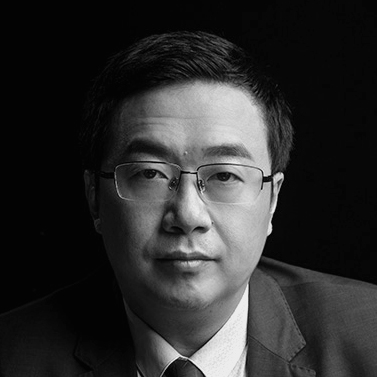
Director, Intelligent Design and Interaction Experience Laboratory (iDi Lab), Hunan University
Director, HNU-Xiaomi Joint R and D Center for Human Factors Engineering of Intelligent Terminals
Researcher, State Key Laboratory of Advanced Design and Manufacturing Technology for Vehicle
Member, Teaching Committee of Hunan University
Distinguished Professor (2025) and Young Scholar (2021), National High-Level Talent Program, Ministry of Education
Leading Talent in Science and Technology Innovation, Furong Program (2025)
Young Furong Scholar (2020); Young Core Teacher of Hunan Province (2012)
Executive Director, Chinese Ergonomics Society; Vice Chair, Design Ergonomics Technical Committee
Director and Proceedings Editor, China User Experience Professionals Association (UXPA China)
Vice Chair, Expert Steering Committee for Talent Cultivation in the China Automotive Electronics Industry
Executive Member, National Expert Committee on Resource Development for Computer Teaching and Industry Practice in Higher Education
Member, Engineering Psychology Committee, Chinese Psychological Society
Member, Human-Induced Vibration Committee, Chinese Society for Vibration Engineering
Member, Huawei Technology Advisory Committee
PhD, Professor and Doctoral Supervisor at the School of Design of Hunan University, and Deputy Director of the Culture and Media Computing Research Center of Hunan University. He was selected for the National High-Level Talent Program of the Ministry of Education as a Distinguished Professor (2025) and Young Scholar (2021), as well as Leading Talent in Science and Technology Innovation under the Furong Program (2025), Young Furong Scholar (2020) and Young Core Teacher of Hunan Province (2012). He concurrently serves as Director of the Intelligent Design and Interaction Experience Laboratory (iDi Lab) of Hunan University, Director of the HNU-Xiaomi Joint R and D Center for Human Factors Engineering of Intelligent Terminals, a researcher at the State Key Laboratory of Advanced Design and Manufacturing Technology for Vehicle, and a member of the Teaching Committee of Hunan University. He has long carried out university-industry collaborative education, leading the establishment of joint R and D centres between Hunan University and enterprises including Baidu (2018), Huawei (2021) and Xiaomi (2025). He received an Excellent Case Award for university-industry collaborative education projects, and won the First Prize and Second Prize of the National Teaching Achievement Award in 2018 and 2022 respectively.
His main research direction is human-computer interaction design. He proposed the theory of "Machine Behaviour Design", taking artificial intelligence as both object and tool, and conducts human-centred research on "intelligent interaction design and cognitive experience" in fields such as transportation, emergency safety, intelligent terminals, emerging media and healthcare. He won the China Machinery Industry Science and Technology Award twice, in 2008 and 2014; the Huawei Most Valuable Partner Award in 2015 and the Huawei Outstanding Contribution Partner Award in 2021; and the title of COMAC Outstanding Scientist in 2024. He has published multiple papers in SCI/SSCI/CSSCI journals such asThe Lancet,Computers in Human Behavior andZhuangshi (Decoration), with two papers selected as ESI Highly Cited Papers. He is listed among CNKI's Top 1% Highly Cited Scholars (2024, 2025). From 1996 to December 2006 he studied at Hunan University, obtaining a Bachelor's degree in Industrial Design, a Master's degree in Design Art and a PhD in Mechanical Engineering. Before joining Hunan University, he worked as an interaction designer at Alibaba (China) Network Technology Co., Ltd. from January 2007 to January 2008, and as a researcher at Google China Engineering Research Institute from January 2008 to February 2009.

Director, Key Laboratory of Intelligent Perception and Computing, Ministry of Industry and Information Technology
Deputy Director, Key Laboratory of Crowd Intelligence Computing for Human-Machine-Thing Integration, Ministry of Education
Dean, Center for Computing and Art Interdisciplinary Research, NPU
Head, Department of Computer Systems and Microelectronics
Recipient, National Science Fund for Distinguished Young Scholars (2020)
Elsevier Highly Cited Chinese Researcher; Stanford World's Top 2% Scientists
Young Top-Notch Talent, National "Ten Thousand Talents Program" (2017)
New Century Excellent Talent, Ministry of Education (2012)
IEEE Senior Member; CCF Council Member and Distinguished Member
Doctor of Engineering, Professor and Doctoral Supervisor at the School of Computer Science of Northwestern Polytechnical University, recipient of the National Science Fund for Distinguished Young Scholars (2020), Vice Dean of the School of Computer Science, Director of the Key Laboratory of Intelligent Perception and Computing of the Ministry of Industry and Information Technology, Deputy Director of the Key Laboratory of Crowd Intelligence Computing for Human-Machine-Thing Integration of the Ministry of Education, and Dean of the Center for Computing and Art Interdisciplinary Research. He is an Elsevier Highly Cited Chinese Researcher and a Stanford World's Top 2% Scientist. He received his PhD from Keio University in Japan in March 2009 and conducted postdoctoral research at TELECOM SudParis in France from 2009 to 2011. He was selected for the Ministry of Education's "New Century Excellent Talent" programme (2012) and the National "Ten Thousand Talents Program" Young Top-Notch Talent programme (2017).
He mainly conducts research on intelligent IoT and pervasive computing, crowd intelligence, and embodied intelligence. He has published more than 200 papers in leading domestic and international journals and conferences, authored books includingCrowd Intelligence Computing for Human-Machine-Thing Integration andIntroduction to Intelligent IoT, and carries out domain applications and technology transfer addressing major national needs in smart cities and social governance.
He has received the First Prize of the Natural Science Award of the Ministry of Education, the First Prize of the Natural Science Award of Shaanxi Province, the First Prize of the Military Science and Technology Progress Award, and Best Paper Awards at major international conferences including ACM SenSys, AAMAS and UIC. He serves as an editorial board member for authoritative international journals such asACM IMWUT,IEEE Transactions on Human-Machine Systems,Frontiers of Computer Science andAI Plus, and as program chair of several important international conferences. He is a Council Member and Distinguished Member of CCF, Chair of the ACM Xi'an Chapter, Vice Director of the CICC Cognition and Behaviour Committee, and Secretary-General of the Belt and Road International Alliance for Intelligent IoT Cooperation.

Vice President, China Industrial Design Association
Dual-appointed Professor, Institute of Medical Robotics, Shanghai Jiao Tong University
Young Scholar, Changjiang Scholars Program, Ministry of Education
Recipient, Shanghai Pujiang Talent Program (2013)
Bao Steel Outstanding Teacher; Tang Lixin Outstanding Scholar
Vice Dean of the School of Design at Shanghai Jiao Tong University, a position he has held since December 2017; he previously served as Vice Dean of the School of Media and Design. He is also Vice President of the China Industrial Design Association and has long been engaged in teaching and research in design strategy and planning, user research and experience design. He has led more than 10 national and provincial or ministerial research projects, serving clients including international companies such as Intel, Samsung, Nissan, Mazda, HP, Yamaha, GE and Panasonic. In 2020 he proposed the theoretical framework of AI-HI integration, and in 2025 further put forward the design concept of "AI and HI Integration", promoting a human-centred transformation of manufacturing in the smart home appliance sector. His research covers design strategy, intelligent interaction and healthcare design. He has led major projects on large commercial aircraft and collaborative robots, and has promoted the establishment of a university-enterprise joint laboratory for smart healthcare. He was selected for the Shanghai Pujiang Talent Program in 2013, and was later selected as a Young Scholar of the Changjiang Scholars Program of the Ministry of Education, receiving the Bao Steel Outstanding Teacher Award.

New Century Excellent Talent, Ministry of Education (2013)
China Top Ten Outstanding Young Designers, Guanghua Longteng Award, Ministry of Science and Technology (2014)
First Beijing Young Teaching Master (2017)
Member, Industrial Design Teaching Steering Committee, Ministry of Education
Member, National College Aesthetic Education Teaching Steering Committee
Executive Director, China Information and Interaction Design Committee
Senior Member, ACM; Member, CCF and YOCSEF
She has long been engaged in work combining artificial intelligence, big data, the Internet and innovative design. In 2002 she introduced a series of undergraduate courses on human-computer interaction interface design and AI and innovative design, and established the Information and Interaction Design specialisation. She was the first in the world to propose quantum thinking and innovative design methods, as well as a meaning-centred interaction design method. She began research on "artificial intelligence plus Internet plus big data plus innovative design" in 2001 and, since 2015, has held six editions of the "Big Data plus Internet plus Intelligence plus Innovative Design" international forum and exhibition.
She has consistently conducted design practice and methodological research in frontier design fields such as interaction design methods, big-data-based user research and usability engineering, new media art and information aesthetics, intelligent product service system design, green IT and sustainable design, big data information visualization and visual analytics, and virtual reality game design. She has introduced sustainable innovative design to interdisciplinary fields including computer science, psychology and communication studies, and has made outstanding contributions to transforming ICT achievements into the productivity of interaction interface user experience design, bringing China's information interaction design and sustainable design to an internationally advanced level.
She has led 20 vertical research projects funded by the National Social Science Fund, the National Natural Science Foundation of China, the Ministry of Education and the Ministry of Culture, covering AI and innovative design, big data and information visualization, sustainable product service design, interaction interface design, and digital cultural heritage and cultural creative industries. She has participated in 6 projects including EU and China-UK cooperative research on sustainable design education and big data and information design, the 863 Program and major projects of the National Social Science Fund, and has led more than 30 commissioned research projects. She has published 96 papers and 11 books.
In areas such as robot design, autonomous vehicle design, digital museum exhibition design, virtual reality game design and smart clothing design, she has won 14 domestic and international design awards including the Red Dot Award, the GM Design Competition, Car Styling, Interior Motives and the Red Star Award, and holds 5 invention patents and software copyrights. She has supervised nearly 50 master's students and 6 doctoral students.

Committee Member, Industrial Design Branch, Chinese Mechanical Engineering Society
Council Member, China Industrial Design Association
Council Member, Design Education Branch, China Industrial Design Association
Member, Industrial Design Teaching Committee of the 4th Higher Engineering Education Discipline, China Mechanical Industry Education Association
Council Member, Human Factors Engineering Branch, Chinese Nuclear Society
Member of the Expert Database, Virtual Teaching and Research Section for "Product Design Talent Training Model Reform", Ministry of Education
Council Member, Industrial Design Professional Committee, Hubei Mechanical Engineering Society
Member (Industrial Design), Hubei Provincial Expert Committee for National Vocational Qualifications in Art and Design
Council Member, Hubei Aesthetics Society
Resident Expert, Hubei New-Type Think Tank Platform; Member, Hubei Artists Association; Member, Hubei Cultural Industry Society
Correspondence Review Expert, China Academic Degrees and Graduate Education Development Center, Ministry of Education
Juror, China National Arts Fund
Selected for the "2005 Top 100 Outstanding Young Talents in China's Design Industry"
Final-round Juror, Excellent Works Award, China Industrial Design Exhibition, Ministry of Industry and Information Technology (2017)
Selected for the Third Batch of the Hubei Province 100 Art Talents Training Program (2021)
Prof. Zhaohui Huang is a professor and master's supervisor, and serves as Director of the Industrial Design Innovation Center (Provincial Design Center) of Huazhong University of Science and Technology.
She has long been engaged in research and teaching in digital medical equipment design, transportation design, product development design, system integration design and cultural creativity. Emphasizing interdisciplinary integration, she carries out practical and innovative activities integrating art and technology, and has established multiple off-campus practice bases and platforms for external academic exchange.
She has led multiple provincial and ministerial as well as industry-commissioned projects, including those funded by the Ministry of Education, providing policy consulting and services for government and enterprises. She has participated in Key Projects of the National Natural Science Foundation of China, the National "973" Program, the National "863" Program and National Major Special Projects for Numerical Control. She has published more than 30 academic papers, 2 monographs (one of which received an award) and 1 textbook.
Her design works were twice selected for the National Art Exhibition, with one selected for the Beijing exhibition, and have been exhibited multiple times in important art and design exhibitions at home and abroad. She has guided students to awards in major domestic and international competitions such as CDN, Red Dot, iF and the Michelin Global Automotive Design Competition, and has received the honorary title of Outstanding Instructor on multiple occasions. She holds multiple utility model and design patents.

Fellow, Chartered Institute of Ergonomics and Human Factors (CIEHF), UK
Executive Director, Chinese Ergonomics Society
Vice Chair, Design Ergonomics Technical Committee, Chinese Ergonomics Society
Expert, Intelligent System Ergonomics Design and Evaluation Standards Working Group, National Technical Committee for Ergonomics Standardization
Visiting Researcher, State Key Laboratory of Nuclear Power Safety Technology and Equipment
Council Member, Human Factors Engineering Branch, Chinese Nuclear Society
Selected for Jiangsu Province "333 High-Level Talent" Program
Recipient of the Jiangsu Provincial "Qinglan Project" and "Six Talent Peaks" Program
Vice Chair, Design Ergonomics Technical Committee, Chinese Ergonomics Society
Expert, National Technical Committee for Ergonomics Standardization
Guest Researcher, State Key Laboratory of Nuclear Power Safety Technology and Equipment
Council Member, Human Factors Engineering Branch, Chinese Nuclear Society
Review Expert, National Natural Science Foundation of China
Prof. Xiaoli Wu is a Professor and Doctoral Supervisor in the Department of Industrial Design at the School of Design Art and Media, Nanjing University of Science and Technology. She holds a PhD in Mechanical Engineering (Industrial Design) from Southeast University (2015) and was a visiting scholar at the Human Centred Computing Research Centre, College of Engineering and Computer Science, Australian National University (2017-2018), the UCL Interaction Centre (UCLIC), University College London (2023), the Human-Computer Interaction Research Centre, University of Birmingham (2023-2024), and the School of Design and Creative Arts, Loughborough University (2025). She previously served as Associate Professor and Master's Supervisor in the Department of Industrial Design at Hohai University (2015-2019).
Her research focuses on the interdisciplinary field of human-computer interaction and information visualization under the "New Engineering" paradigm. Through the convergence of design science, ergonomics and cognitive science, she studies the theoretical and methodological systems of information visualization and design cognition in human-information-physical systems within intelligent interactive environments. Her research team, the Human Factors and Information System Interaction Research Group, addresses the needs of industrial intelligent transformation, conducting research on human-computer interaction and information visualization for large-scale production real-time scheduling and full-process manufacturing monitoring, serving the intelligent transformation of the photovoltaic industry and nuclear power control. Her research outcomes have been applied in major industrial fields, including the construction of integrated industrial system platforms for enterprises such as Trina Solar, CGN and AVIC Jonhon Optronic, promoting the intelligent transformation of multiple enterprises.
She has led four national-level projects funded by the National Natural Science Foundation of China and the National Social Science Fund, as well as more than 20 provincial and ministerial-level projects, with current research funding exceeding 3 million RMB. Her representative funded projects include the National Natural Science Foundation of China General Program "Industrial Information Visualization Representation Mechanism Coupling Temporal Structural Information Flow and Multimodal Physiological Cognition" (52175469), the National Social Science Fund Post-funding Program "Human-Machine System Interaction and Cognitive Performance in Intelligent Manufacturing" (20FGLB046), and the Jiangsu Provincial Key R&D Program "Visual Information Visualization Methods and Industrialization of Production Line Control Interaction Interfaces under Real-Time Intelligent Manufacturing Monitoring" (BE2019647).
She has authored monographs includingHuman-Computer Interaction in Intelligent Manufacturing: Requirements, Principles, Technologies and Applications (China Machine Press),Information Presentation and Cognitive Performance of Human-Machine Systems in Intelligent Manufacturing (Wuhan University Press),Design Cognition: Research Methods and Visual Representation (2nd Edition, Southeast University Press), andThe Error-Cognition Mechanism of Complex Information Task Interfaces (Science Press). She teaches core undergraduate courses including Ergonomics, User Research, Design Psychology and Product Form Design, as well as graduate courses including Human-Computer Interaction System Design and Design Cognition. She has led and participated in more than 10 teaching reform projects, with related courses recognised as graduate planning textbooks, research-based demonstration courses and core courses of the Industrial Design major.

Founder and Director, Bio-Inspired Robotics, Technology, and Healthcare (BIRTH) Lab
Senior Global Futures Scientist, Arizona State University
Alliance Fellow, Mayo Clinic-ASU Alliance for Health Care
Senior Member, National Academy of Inventors
Senior Member, IEEE
2024 Arizona Biomedical Research Centre New Investigator Award
Fulton Entrepreneurial Fellowship
Sigma Xi Best Ph.D. Thesis Award
Magnetic fields offer a powerful design paradigm for miniature and untethered robotic systems, enabling wireless actuation, navigation, and control in environments where conventional electromechanical architectures are difficult to implement. In this talk, I will present our recent work on the intelligent design of magnetic robotic systems for minimally invasive medical procedures, with emphasis on the integration of materials, mechanisms, field-driven actuation, sensing, and control across multiple length scales.
I will first discuss ferrofluid-based microrobots that can be remotely guided, assembled, and reconfigured for targeted delivery and microscale manipulation. I will then introduce our development of a semi-autonomous magnetic robotic platform for assisting Endoscopic Submucosal Dissection (ESD), a minimally invasive procedure for removing large gastrointestinal tumours, highlighting the system-level challenges of clinically oriented magnetic robotic tools, including workspace design, actuation strategies, human-robot interaction and autonomous assistance. Together, these projects demonstrate how intelligent electromechanical design can transform magnetic actuation from a physical principle into practical robotic systems for precision intervention. I will conclude by discussing translational challenges and broader opportunities for magnetic robotics in next-generation minimally invasive care.
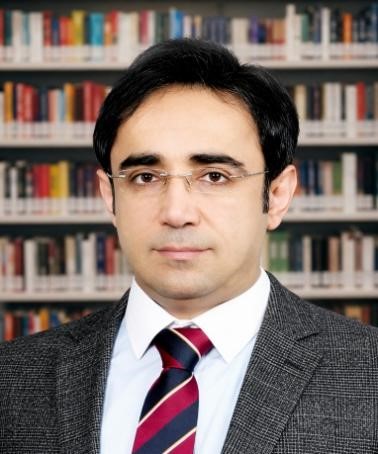
Editor, Engineering Applications of Artificial Intelligence (Elsevier)
Vice-Chair, IEEE Consumer Technology Society Technical Committee on Machine Learning, Deep Learning and AI in Consumer Electronics
Track Chair, IEEE ICCE 2024; Session Chair, IEEE ICC 2022
Senior Member, IEEE
Active Delegate representing South Korea, ISO/IEC MPEG (2014-2017)
Research Excellence Professor Award, Sejong University (2025)
Scientist Medal of the Year, IAAM Sweden (2017)
Outstanding Emerging Researcher Award, Iranian Ministry of Science (2017)
Dissertation of the Year Award in Engineering (2016)
Sixth-generation cellular networks (6G) will serve not merely as faster communication infrastructures, but as distributed intelligent systems in which communication, sensing, computation, control, and learning interact through tightly coupled decision processes. This talk explores how federated deep reinforcement learning (DRL) can support these systems under rapidly varying channels, heterogeneous local observations, strict latency requirements, privacy constraints, and competing objectives, including spectral efficiency, energy efficiency, and information freshness.
The presentation first introduces an age-of-information-aware federated DRL framework that jointly addresses hybrid beamforming, rate-splitting resource allocation, and adaptive model aggregation. Complementary actor-critic and value-based learning mechanisms handle continuous radio-control variables and discrete resource-allocation decisions, respectively, while a meta-learning scheduler determines when the expected learning benefit of federation justifies its communication cost. The reported results show improvements in spectral and energy efficiency, as well as substantial reductions in information age and federated communication overhead.
The talk subsequently broadens the discussion toward the emerging architecture of AI-native 6G mobility, examining vehicular foundation and world models, digital twins for counterfactual evaluation, agentic orchestration, goal-oriented semantic communication, and integrated sensing and communication, and discussing open challenges including distribution shift, malicious clients, privacy leakage, uncertainty calibration, constrained exploration, runtime monitoring, and certification of learned policies. The central argument is that federated DRL offers a strong optimization foundation, but deployment-ready vehicular intelligence will require semantic, agentic, uncertainty-aware, and operationally accountable learning systems.